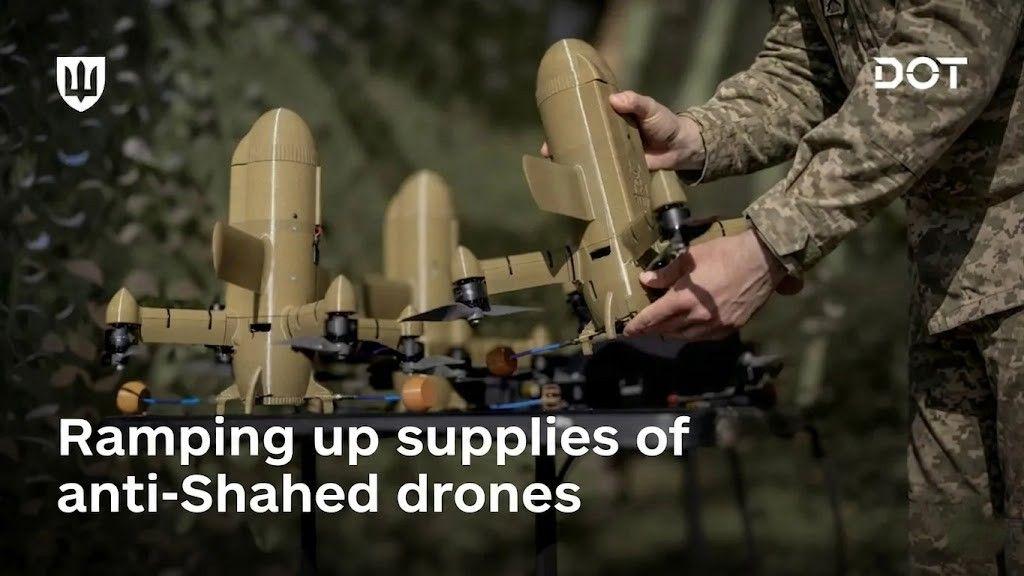
The Ministry of Defence continues to strengthen air defence consistently, with the Armed Forces already receiving more than twice the number delivered in the whole of 2025.
Supplies are secured through contracts with the Defence Procurement Agency (DOT) and other mechanisms, ensuring continuity and expansion.
Multiple supply channels
Interceptor drones are reaching frontline units via several routes:
- Direct procurement under DOT contracts
- The Army of Drones. Bonus programme
- The DOT Chain Defence weapons marketplace
This multi channel approach allows volumes to grow while guaranteeing stable supplies.
Battlefield effectiveness
The drones have already proved their worth in combat, significantly reinforcing Ukraine’s air defence. They ease the burden on missile based systems, enabling those resources to focus on enemy missiles.
Anti Shahed drones are a technological counter to the enemy tactics. They cost hundreds of times less than missile systems and dozens of times less than Shaheds themselves, making them a far more efficient use of government funds.
“The results are already tangible: in March, interceptor drones brought down a record 33,000 enemy UAVs of different types. We are continuing to scale up supplies. Protecting the skies is one of the President’s key defence priorities. To this end, the Air Forces have set up a new command for ‘small’ air defence — enhancing protection through interceptor drones,” said Defence Minister Mykhailo Fedorov.
The Ministry’s task is to ensure a stable flow of interceptors to the Armed Forces and safeguard Ukrainians against Shahed attacks.