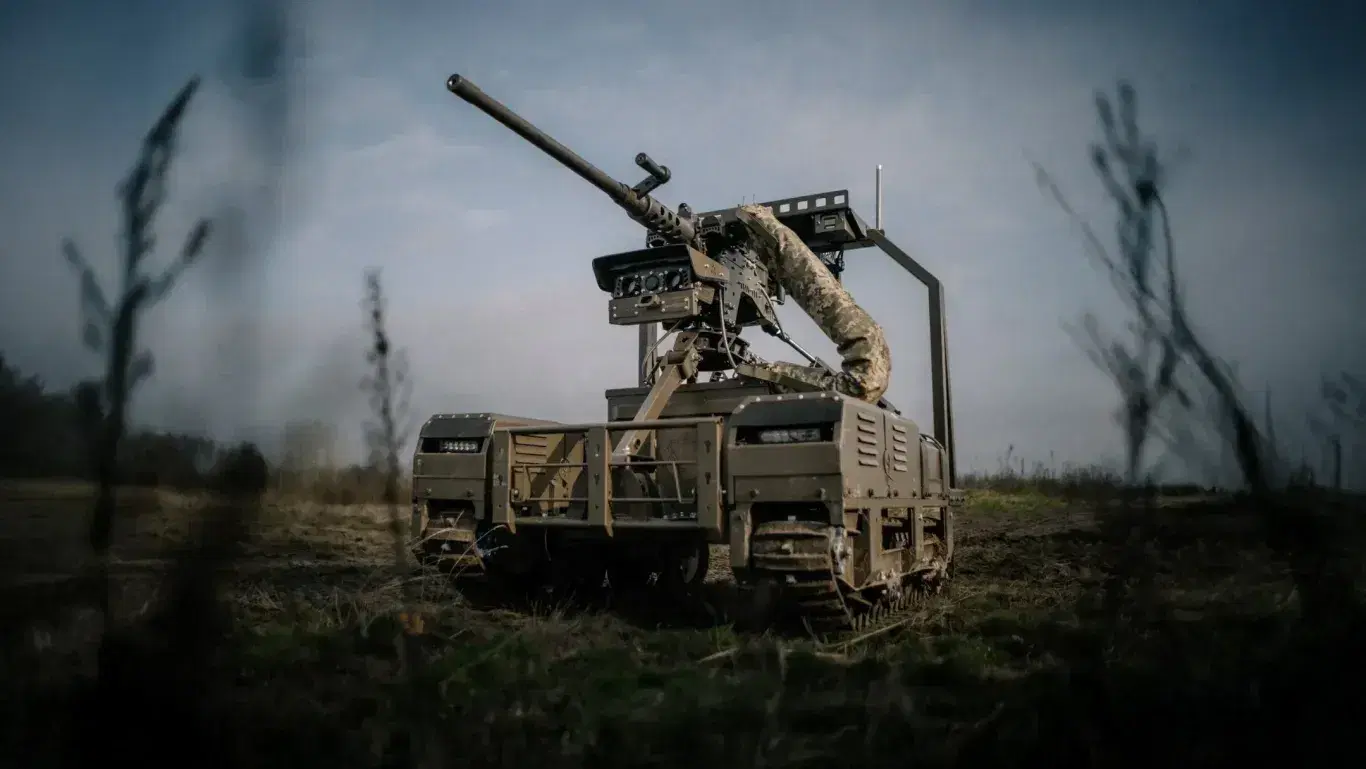
The Ministry of Defence is intensifying the supply of unmanned ground vehicles to the Defence Forces and accelerating their deployment to frontline units.
These decisions were discussed during a meeting between Defence Minister Mykhailo Fedorov and UGV manufacturers.
Scaling up deliveries
The key objective is to meet the frontline’s demand for unmanned ground vehicles and ensure their rapid arrival in combat units.
UGVs are already performing vital logistics and evacuation tasks. In March alone, troops carried out more than 9,000 missions using these systems.
The goal is to transition up to 100% of frontline logistics to unmanned solutions.
During the first half of 2026, the Ministry of Defence plans to contract 25,000 UGVs — twice as many as in the whole of 2025.
The Defence Procurement Agency (DOT) has already signed 19 contracts with manufacturers worth a total of UAH 11 billion.
Measures to speed up supply
A series of decisions have been adopted to accelerate deliveries.
Contracting has been unblocked even where product prices change — an issue that previously caused delays due to tax law amendments affecting VAT treatment. These matters are now being resolved comprehensively.
Funding has been synchronised and procurement volumes significantly increased, while the Defence Procurement Agency has expedited contract signing under the Ministry’s direction.
A dedicated UGV Competence Centre is also being established within the Ministry of Defence. Working jointly with the General Staff and military units, it will speed up the introduction of unmanned ground vehicles at the front and serve as a single coordination hub for manufacturers.
A new approach to procurement planning
The Ministry of Defence is changing the way it plans purchases.
From this year, manufacturers will begin receiving contracts for the following year. This will allow businesses to forecast production and ensure timely delivery of the required volumes.
The UGV market and technology development
Unmanned ground vehicles are among the fastest growing areas of defence technology.
At the outset of the full scale war, this sector barely existed. Today, it has become a fully fledged market shaped with the support of the Brave1 cluster: more than 280 companies and over 550 solutions, backed by 175 innovation grants.
Concurrent developments are also advancing in related fields:
- Engineering systems for mining and demining
- Combat platforms for strike missions
- Ground based kamikaze drones
- Automated turrets for countering aerial threats
“Our focus is on creating affordable and effective strike UGVs that can be rapidly scaled. Together with manufacturers, we have identified the key challenges: scaling production, standardisation, training, localisation of components, proving grounds, and integration into combat processes. For each of these areas, solutions are being prepared on the President’s instructions to ensure uninterrupted delivery of technology to the front,” stressed Mykhailo Fedorov.