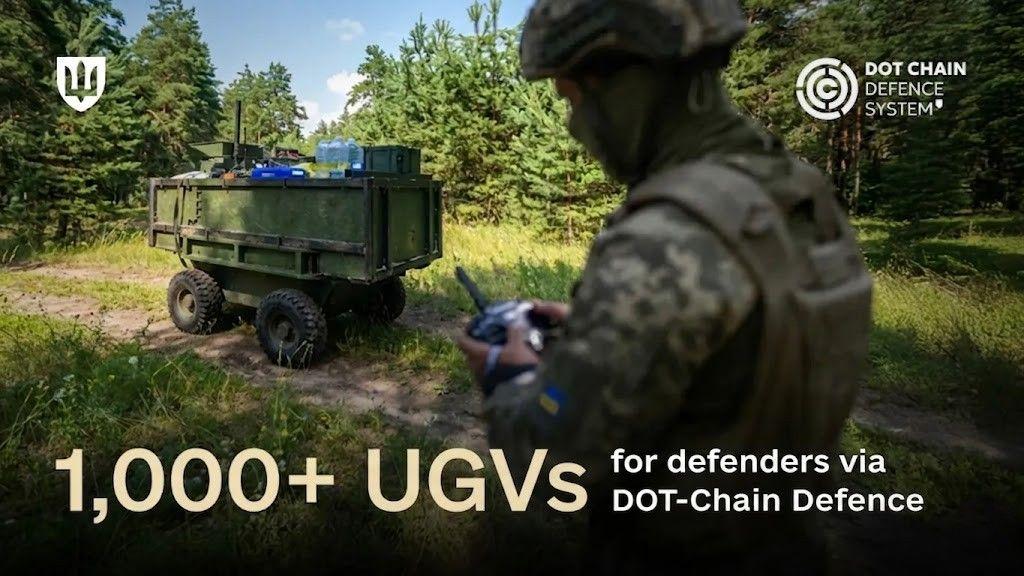
The Ukrainian Defence Forces have already received 1,028 unmanned ground vehicles (UGVs) worth UAH 487,203,212 through the DOT-Chain Defence weapons marketplace.
The Ministry of Defence continues to expand the robotisation of the military — a strategy designed to save soldiers’ lives and increase battlefield effectiveness. UGVs are increasingly taking on dangerous frontline tasks in place of human troops.
One-third of orders already supplied
In total, 3,062 UGVs have been ordered through DOT-Chain Defence, with a combined value of UAH 1,956,109,796. Of these, one third have already been delivered to frontline units.
DOT-Chain Defence presently offers 33 different UGV models. In the first half of 2026, the Ministry of Defence plans to contract 25,000 UGVs under various programmes — double the number procured in the whole of 2025.
Most popular orders
The vehicles most frequently requested by the military include:
- Wheeled logistic UGVs
- Tracked logistic UGVs
- Combat UGVs
- Minelayer UGVs
- Kamikaze UGVs
Orders are placed through DOT-Chain Defence — a weapons marketplace that streamlines and accelerates the supply of electronic warfare tools, unmanned systems and munitions. Developed by the Defence Procurement Agency (DOT), it forms part of the wider DOT-Chain ecosystem supporting the Armed Forces.
How DOT-Chain Defence simplifies military procurement
Through DOT-Chain Defence, combat units themselves choose the exact types and quantities of the equipment they need. The Defence Procurement Agency then takes on all the bureaucracy — from contracting with manufacturers to handling payments and overseeing logistics.
As a result, delivery times have been slashed from months to weeks, ensuring that the right gear is received by the right frontline units at the right time.
Within the Army of Drones. Bonus initiative, troops can exchange points earned for destroying or damaging enemy targets for unmanned ground vehicles on the Brave1 Market and receive them promptly via DOT-Chain Defence.
The Ministry of Defence has reported that April saw UGVs perform 10,281 logistic and evacuation missions or 343 daily. Compare this with the March tally of over 9,000 missions.
Defence Minister Mykhailo Fedorov has emphasised that one of the key goals is to transfer all frontline logistics to unmanned systems.